
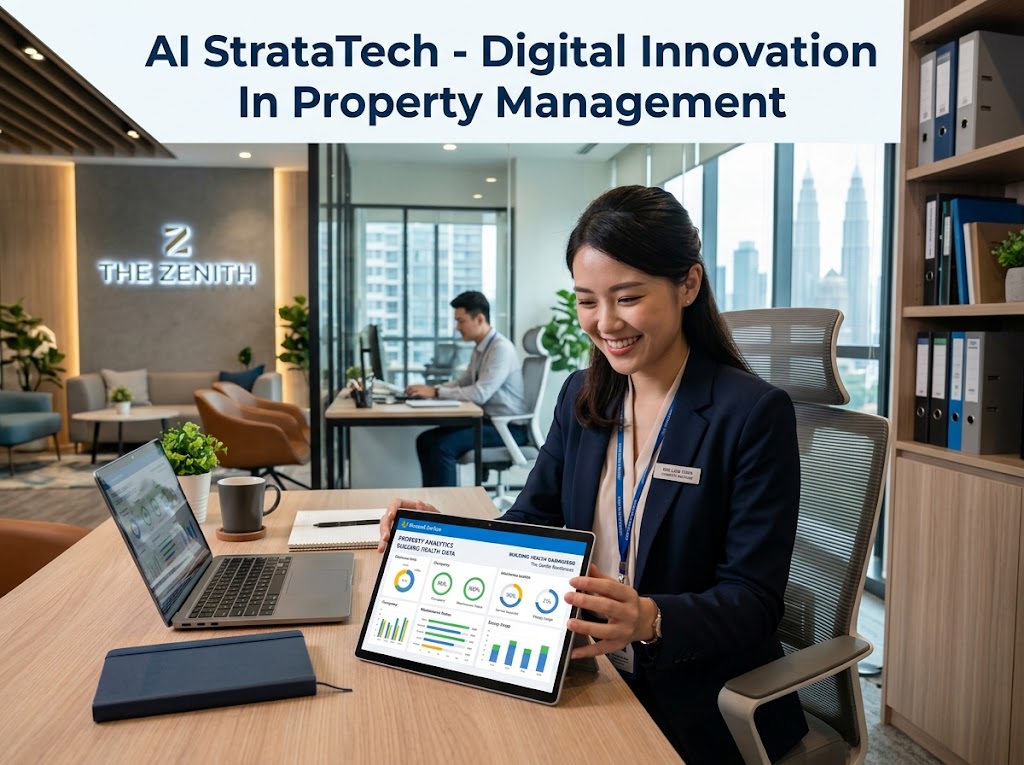
National Housing Policy 2026-2035 is transforming strata governance into a national data priority. The government mandate is clear: centralize and secure property data.
But for property managers, JMBs, and MCs on the ground, compliance is only half the battle. Your daily reality is surviving the immediate chaos: demanding owners, endless WhatsApp complaints, and overflowing task lists. You do not just need a compliant database. You need operational tools that deliver immediate relief.
Here is how adopting AI targets your biggest daily pain points and drives instant ROI in strata operations.
The biggest friction point in strata management is communication. Owners and residents expect 24/7, instant responses to their inquiries. When management offices are overwhelmed, the resident experience suffers, leading to committee disputes and lower fee collection rates.
AI directly tackles this expectation gap, providing an instant buffer between your staff and the residents.
Key Takeaway: Adopting AI for customer service instantly manages owner expectations, drastically reduces management fatigue, and elevates the resident experience.
Fragmented communication leads to dropped tasks. When complaints are scattered across emails, phone calls, and paper forms, administrative tasks drain property management resources.
AI-powered workflow automation standardizes these tedious processes, bringing order to daily task management.
Key Takeaway: Workflow automation reduces administrative overhead by eliminating redundant data entry and ensuring no resident request falls through the cracks.
Traditionally, managers lack a clear picture of a property's overall health because insights are buried in hundreds of isolated daily tasks.
AI bridges this gap. By analyzing the data generated from your daily workflow automation, algorithms can instantly predict the health condition of the condo.
Key Takeaway: AI enables true data-driven decision making. It turns isolated daily tasks into a real-time health dashboard for your building, allowing you to address underlying issues before they become crises.
Manual administrative tasks drain property management resources and increase the margin for human error. Fragmented data leads to late payment tracking, lost invoices, and inaccurate reconciliations.
AI-powered workflow automation standardizes these tedious processes. A centralized property data hub can autonomously manage the financial lifecycle of a strata property.
Key Takeaway: Workflow automation reduces administrative overhead by eliminating redundant data entry, ensuring total financial transparency for JMBs and MCs.
To successfully manage a property under the new National Housing Policy, JMBs and MCs cannot rely on guesswork. They need a unified, intelligent overview of property health.
AI aggregates operational, financial, and facility data into a single pane of glass. This enables true data-driven decision making at the committee level.
Key Takeaway: AI transforms static spreadsheets into dynamic insights, empowering property managers to make highly accurate, cost-effective decisions.
The National Housing Policy 2026-2035 set the standard for data governance. Now, it is time to put that data to work to make your day-to-day operations easier.
At Agmo Strata, our Minilab is designed to seamlessly integrate these AI capabilities into your daily workflows. By moving away from fragmented systems and embracing intelligent automation, you can lower costs, instantly satisfy residents, and regain control of your property management operations.
Contact us to explore the Agmo Minilab and our AI solutions - contact@agmostrata.com