
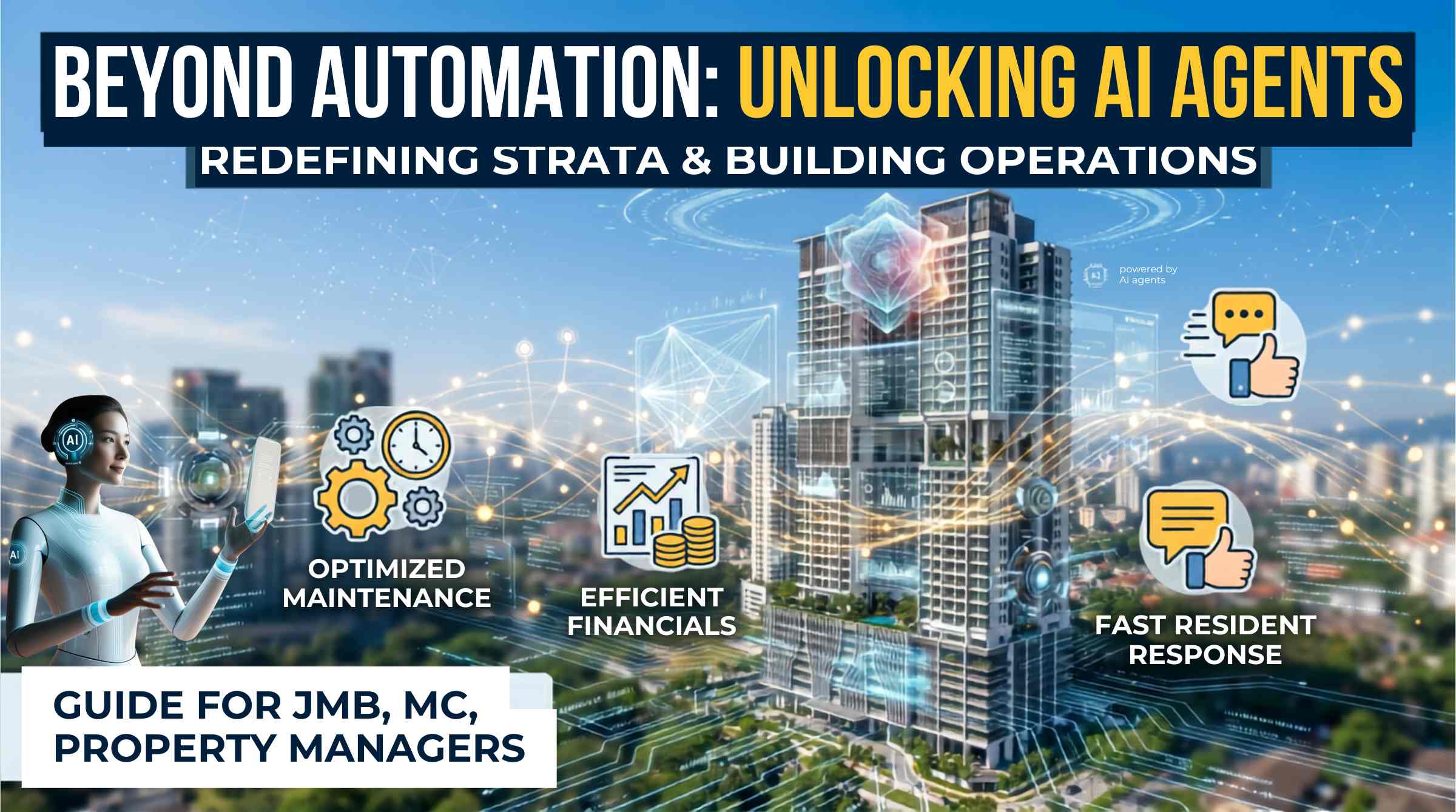
For years, technology in property management has been synonymous with standard automation—think automated billing, digital complaint forms, or scheduled maintenance reminders. While these tools have undoubtedly streamlined daily tasks, they still rely heavily on human intervention to make decisions, cross-reference data, and handle exceptions.
Today, the property management sector is on the brink of a major shift: the transition from static automation to AI Agents (Agentic AI).
For property management company owners, JMBs, and MCs, understanding this shift is no longer just about staying tech-savvy—it is about understanding how the next generation of technology can solve the chronic operational bottlenecks that plague strata developments.
To understand the impact on building operations, we must first distinguish a traditional software system from an AI Agent.
In short, while traditional software acts as a digital filing cabinet or messenger, an AI agent acts as a virtual teammate capable of executing complex workflows from start to finish.
Traditional facilities management relies on fixed schedules or waiting for something to break. AI agents can continuously analyze data streams from building systems (like lifts, water pumps, and smart meters).
Instead of simply alerting a technician when a pump fails, an agent can detect subtle anomalies in energy consumption or vibration patterns before a breakdown occurs. The agent can automatically flag the issue, check the building's budget constraints, and draft a maintenance request for the MC's approval, preventing costly emergency repairs.
Property managers and JMBs are often overwhelmed by a high volume of daily resident inquiries, ranging from minor parking disputes to critical plumbing issues.
An AI agent doesn't just reply with canned answers. It can interpret the context, severity, and emotional tone of a resident's message.
Managing third-party contractors—for cleaning, security, or landscaping—requires constant monitoring and paperwork. AI agents can streamline this lifecycle by:
Strata management involves a mountain of financial data, from sinking fund allocations to maintenance fee collections. JMBs and MCs, often composed of volunteering residents, may not have the time to audit complex financial sheets monthly.
AI agents can act as continuous financial auditors. They can scan ledger data to identify trends in payment defaults, predict future cash flow constraints based on historical collection rates, and ensure that the building's operational expenses align with local regulatory frameworks (such as the Strata Management Act in Malaysia).
It is crucial to note that the adoption of AI agents is not about replacing human property managers or committees. The human element—empathy, community leadership, and nuanced legal judgment—cannot be replicated by technology.
Instead, Agentic AI serves to lift the administrative burden. By taking over data entry, routine follow-ups, and complex triaging, it allows property managers to step out from behind their desks and focus on what truly matters: fostering a safe, well-maintained, and harmonious community.
As high-rise living becomes the standard, the complexity of managing these vertical communities will only increase. Embracing the shift toward intelligent, decentralized AI ecosystems is no longer a futuristic concept; it is a practical roadmap to achieving operational transparency, reducing overhead costs, and ultimately protecting the long-term valuation of the property.